Why do I feel worse on a diet everyone calls healthy?
Delayed Food Reaction Testing Explains Clean Diet Failures
You've done everything right, and yet the bloating keeps coming back and the brain fog won't lift. The foods people assume are safe are often the exact ones driving their symptoms.
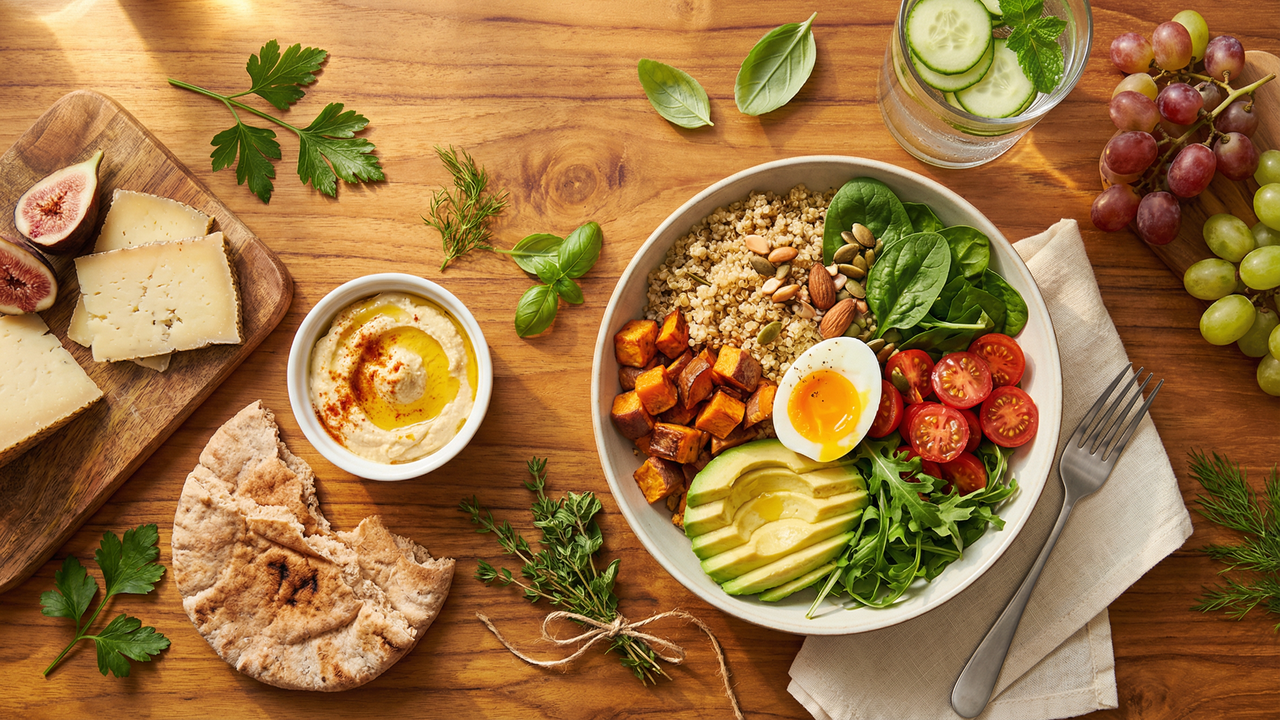
Delayed food reaction testing explains why your clean diet isn’t fixing your brain fog, fatigue, or chronic inflammation
You’ve done everything right. You cut out processed food, read labels, maybe even followed an elimination diet for months.
And yet — the bloating keeps coming back. The brain fog won’t lift. You’re still tired in a way that sleep doesn’t fix, still dealing with joint aches or skin flare-ups you can’t pin to anything obvious.
Here’s what I’ve seen over and over in clinical practice: the foods people assume are safe are often the exact ones driving their symptoms.
Not because they’re eating junk — but because their immune system has quietly developed a delayed reaction to something genuinely “healthy,” like eggs, almonds, or gluten.
Without delayed food reaction testing, there’s no way to know.
In this article, you’ll learn why IgG food sensitivity reactions are fundamentally different from food allergies, how they silently fuel chronic inflammation for days after eating, and why elimination diets alone often leave the real culprits in place.
Keep reading — the second half is where it gets actionable.
Key Takeaways
- IgG food sensitivity reactions are delayed — unlike immediate IgE allergies, these are delayed-type hypersensitivity responses that can be nearly impossible to trace back to a specific food without testing.¹
- These reactions are fundamentally different from IgE food allergies, which produce immediate, unmistakable symptoms like hives or throat swelling.
- Common “healthy” foods — including eggs, gluten, dairy, and almonds — are among the most frequent IgG triggers.²,³
- Repeated exposure to IgG trigger foods contributes to chronic, low-grade inflammation that can manifest as brain fog, fatigue, joint pain, skin conditions, and digestive complaints.²,⁵
- Elevated food-specific IgG antibodies are significantly associated with intestinal permeability markers, including LPS and occludin — meaning food sensitivities and gut barrier damage are closely linked.²
- Elimination diets can be a useful tool, but without data, they’re often incomplete — most people miss their actual triggers even after months of restricting foods.
- Food sensitivity testing paired with gut barrier testing (measuring zonulin, occludin, LPS, and Candida) gives you the most complete picture of what’s driving your symptoms.
Why Your Immune System Reacts to Food in Two Very Different Ways
Most people are familiar with food allergies — the kind where eating a peanut can cause throat swelling or hives within minutes.
That’s an IgE-mediated response: fast, dramatic, and hard to miss. If you have a true IgE allergy, you already know it.
Food sensitivities work through a completely different arm of the immune system, driven by IgG antibodies rather than IgE.
These are delayed-type hypersensitivity responses — meaning the immune reaction unfolds over hours to days, not seconds.¹
The symptoms that follow can be subtle and spread across the body: a headache the morning after dinner, brain fog that won’t clear, bloating that seems random, or joint stiffness without an obvious cause.
Because there’s no dramatic immediate reaction to point to, the connection between food and symptoms almost never gets made.
You ate that meal two days ago. How would you ever connect it? This is the core problem with IgG sensitivities — and it’s exactly why delayed food reaction testing exists.
The Foods Most Likely to Be Quietly Causing You Problems
Here’s something that surprises many people: the foods most commonly associated with IgG reactions aren’t junk food. They’re staples.
Gluten, eggs, dairy, almonds, soy — these are foods many health-conscious people eat daily, often in large amounts, because they’ve been told they’re good for them.
For many people, they are. But for others, repeated exposure triggers an IgG immune response that compounds quietly over time.
Research specifically found that wheat, dairy, and egg sensitivities were most strongly associated with intestinal permeability markers in adults with and without gastrointestinal symptoms.²
Gluten, in particular, has a well-documented relationship with gut barrier integrity.
Gliadin — a protein in wheat — triggers the release of zonulin, which regulates the tight junctions between intestinal cells.⁴
When those junctions loosen, the gut becomes more permeable. Partially digested proteins and bacterial fragments enter the bloodstream, driving systemic inflammation that can show up as joint pain, skin flares, brain fog, and more.⁵
Why Elimination Diets Alone Often Fall Short
Elimination diets can be genuinely helpful when done well — they’re not a bad idea in principle. The problem is executing them without data.
I’ve worked with patients who ran meticulous elimination protocols for months — cutting gluten, dairy, soy, corn, eggs, and more.
Some improved temporarily. But many still had lingering symptoms because they never identified their actual triggers. They were removing foods based on general lists, not their own immune response.
IgG reactions are highly individualized. One person reacts severely to eggs and not at all to gluten. Another has the opposite pattern. There’s no universal trigger list, which is what makes this so hard without objective data.
Our post on food sensitivity testing and what elimination diets miss covers exactly why this approach has such a high failure rate.
The other issue is time — and months of unnecessary restriction if the foods you removed aren’t your real problem.
Understanding Your Immune System
Two Ways Your Body Reacts to Food
Not all food reactions look the same — and the one most people miss is the one most likely driving chronic symptoms.
⚡
Type 1 · IgE Antibody
Immediate Allergic Reaction
⏱️
Onset
Within seconds to minutes of exposure
🔴
Symptoms
Hives, throat tightening, swelling — unmistakable and hard to miss
🩺
Diagnosis
Standard allergy testing detects IgE reactions reliably
If you have an IgE allergy — you already know it.
VS
🌊
Type 2 · IgG Antibody
Delayed Food Sensitivity
⏱️
Onset
Hours to days after eating the trigger food
🌫️
Symptoms
Brain fog, joint aches, bloating, fatigue — diffuse and easy to miss
🔍
Diagnosis
Standard allergy panels don’t test for IgG — specific sensitivity testing required
By the time symptoms appear, the meal is long forgotten. That’s why IgG reactions go undetected for years.
💡
The diagnostic gap: IgE reactions get identified. IgG reactions get labeled as stress, aging, or “just how you feel” — because no one ran the right test.
What Delayed Food Reaction Testing Actually Measures
Delayed food reaction testing — specifically IgG food sensitivity testing — measures your immune system’s antibody response to specific foods.
Unlike a standard allergy panel, which screens for immediate IgE reactions, this test identifies the slower, chronic inflammatory responses that routine workups don’t typically catch.
The KBMO FIT (Food Inflammation Test) panel analyzes IgG antibodies alongside C3d complement activation — an additional inflammatory marker that helps distinguish foods genuinely driving an immune burden from those showing up as background exposure.
The FIT 22 screens the 22 most clinically common triggers and can be upgraded to FIT 176 for broader coverage.
Pairing food sensitivity testing with gut barrier testing is where the picture really comes together.
Gut Health · The Vicious Cycle
Why Food Sensitivities and Gut Damage Feed Each Other
This isn’t a one-way street. Food sensitivities and intestinal permeability reinforce each other — and the cycle doesn’t break without intervention.
Step 1
🔁 Repeated Exposure to Trigger Foods
The immune system tags certain food proteins as threats and begins producing IgG antibodies — silently, over months or years of daily eating.
↓
Step 2
🌫️ Chronic Low-Grade Inflammation
Ongoing IgG immune activation generates systemic inflammation — spreading across the body as fatigue, brain fog, skin flares, and joint pain.
↓
Step 3
🧱 Tight Junctions Weaken
Inflammation degrades zonulin and occludin — the proteins holding the intestinal lining together. The gut wall becomes increasingly permeable.
↓
Step 4
🚪 Antigens Enter the Bloodstream
Partially digested food particles and bacterial fragments pass through the compromised gut wall — triggering a broader, body-wide immune response.
↓
Step 5 — The Loop Closes
📈 More IgG Antibodies Produced
The immune system responds with more IgG production — broadening food sensitivities, deepening the inflammatory load, and returning to Step 1.
🔓 Breaking the cycle requires two things:
Identifying and removing your specific IgG trigger foods — and actively supporting gut barrier repair. Address only one side and the other half of the loop stays intact.
Why Gut Barrier Testing Belongs in the Same Conversation
Research published in Frontiers in Nutrition found that food-specific IgG antibodies are significantly and positively associated with intestinal permeability biomarkers — specifically anti-LPS and anti-occludin IgG and IgA antibodies — in 111 adults with and without gastrointestinal symptoms.²
In plain terms: if you have notable IgG food sensitivities, your gut barrier is very likely involved.
Food sensitivities and gut permeability aren’t two separate problems — they feed each other.
A compromised gut lining allows more food antigens into the bloodstream, triggering more IgG responses, which drives more inflammation, which further weakens the barrier.
It’s a cycle that doesn’t break on its own.
The KBMO Gut Barrier Panel tests four key markers — zonulin, occludin, LPS, and Candida antibodies — that together show how well your intestinal barrier is actually functioning.
Zonulin, characterized by Dr. Alessio Fasano, is a key regulator of intestinal tight junctions and has been associated with a range of chronic inflammatory conditions — from IBS to autoimmune disease.⁵
Knowing which foods are triggering your immune system and how your gut barrier is holding up means your protocol can target the right things rather than casting a wide, exhausting net.
What Testing Actually Gives You That Guesswork Doesn’t
I see this pattern regularly — a composite of people who come to me after months of spinning their wheels.
They’ve already cut gluten. Gone dairy-free. Blood work from their primary doctor comes back normal, which should be reassuring — but isn’t, because they still don’t feel well.
Brain fog, fatigue, unpredictable gut symptoms remain.
When we run the food sensitivity panel, the result is usually something unexpected: their highest IgG reaction is to a food they never thought to eliminate.
Often almonds — eaten daily as a “healthy” snack. Or eggs, which became a staple once they cut other proteins. And the foods they’d been avoiding for months? No significant reaction.
***That’s the difference between data and guesswork. ***
With results in hand, the path becomes specific — remove the reactive foods for a defined period, support the gut barrier with a targeted protocol, and reintroduce foods strategically once healing is underway.
That’s a plan. Everything else is trial and error.
Getting Tested — What the Process Looks Like
The KBMO Gut Testing Package includes both the FIT 22 food sensitivity panel (upgradeable to FIT 176) and the full gut barrier assessment, processed in a CLIA-certified laboratory with medical director oversight.
The kit is mailed to you. A simple finger-stick blood draw is all that’s needed. Results come back as a comprehensive report showing your individual reactivity levels to each food and each gut barrier marker, and a functional medicine health coach walks you through the findings to build a practical protocol.
For symptoms spanning multiple systems — fatigue, mood changes, brain fog alongside gut issues — the Interconnected series (currently available for a limited-time free viewing) is also worth watching before or alongside your testing.
The Bottom Line
If you’ve been doing everything right and still not getting results, the answer probably isn’t that you need to try harder.
It’s that you’ve been working without the right information.
Delayed food reaction testing removes the guesswork.
It tells you — specifically, based on your immune system’s actual responses — which foods are worth removing, and which ones you’ve been unnecessarily avoiding.
When you pair that with a gut barrier assessment, you get a full picture of what’s happening beneath the surface.
Clean eating is a foundation, not a fix. The fix starts with knowing what your body actually needs.
About the Author

Dr. Pedram Shojai is a Doctor of Oriental Medicine, New York Times bestselling author, ordained Taoist Abbot, and award-winning filmmaker who uniquely bridges the gap between ancient Eastern wisdom and Western modern science.
Known globally as “The Urban Monk,” Dr. Pedram’s extraordinary journey began at UCLA pre-med before a pivotal moment led him to spend four years training as a Taoist monk under a Kung Fu Master at the Yellow Dragon Monastery lineage.
After ordination, Dr. Pedram returned to Western medicine, founding one of the first integrative medical groups in Los Angeles in the early 2000s.
He operated brain and sleep labs for years, working alongside top neurologists and treating thousands of patients.
However, recognizing that the healthcare system was designed as a “MASH unit patching up broken bodies” rather than preventing illness, he pivoted to upstream prevention through education and media.
As CEO and founder of Urban Monk Productions Inc., Dr. Pedram has produced over a dozen acclaimed documentaries and series — including Interconnected, Gateway to Health, Hormones, Health & Harmony, and Origins — seen by millions on Netflix, Amazon Prime, and PBS.
His 8 books, translated into 30+ languages, include the New York Times bestseller The Urban Monk, along with The Art of Stopping Time, Focus, and Inner Alchemy.
Dr. Pedram has studied with the Dalai Lama, Karmapa Lama, and spiritual masters in India and Nepal.
A Qigong master with over 20 years of daily practice, he teaches temple-trained techniques adapted for modern householders — practical tools for busy professionals, parents, and entrepreneurs seeking sustainable wellness without guru dependency.
His Urban Monk podcast has garnered millions of downloads, and his Urban Monk Academy serves over 100,000 students worldwide.
Sources
- Role of Immunoglobulin G Antibodies in Diagnosis of Food Allergy, Advances in Dermatology and Allergology, 2016.
- Associations Between Food-Specific IgG Antibodies and Intestinal Permeability Biomarkers, Frontiers in Nutrition, 2022.
- Specific Immunoglobulin E and G to Common Food Antigens and Increased Serum Zonulin in IBS Patients, Antibodies (Basel), 2022.
- Zonulin and Its Regulation of Intestinal Barrier Function: The Biological Door to Inflammation, Autoimmunity, and Cancer, Physiological Reviews, 2008.
- All Disease Begins in the (Leaky) Gut: Role of Zonulin-Mediated Gut Permeability in the Pathogenesis of Some Chronic Inflammatory Diseases, F1000Research, 2020.